Running a small business requires more than a great product or service. Cash flow, working capital, and access to financing all play important roles in determining whether a company can grow, survive economic changes, and take advantage of new opportunities. Fortunately, there are several financial solutions for small businesses that can provide the flexibility needed to manage expenses and fuel growth.
Whether a company is dealing with seasonal fluctuations, rapid expansion, or unexpected expenses, understanding the available funding options can help business owners make smarter decisions. This guide explores the most popular financing methods and explains how to determine which option may be best for your business.
Traditional Financing Options for Small Businesses
One of the most common forms of financing is the traditional bank loan. Bank loans can provide large amounts of capital with fixed repayment terms and competitive interest rates. These loans are often ideal for established companies with strong credit histories and financial statements. However, the application process can be lengthy and approval requirements may be difficult for newer businesses or companies experiencing uneven cash flow.
Another popular option is a business line of credit. Unlike a lump-sum loan, a line of credit allows companies to borrow funds as needed and only pay interest on the amount used. This flexibility makes lines of credit valuable for managing seasonal expenses, payroll fluctuations, inventory purchases, and emergency costs.
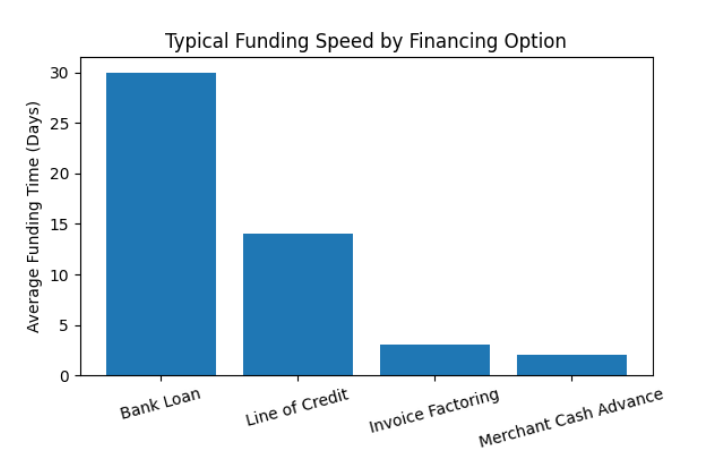
Invoice factoring has become an increasingly attractive solution for businesses that sell to commercial customers. Instead of waiting 30, 60, or even 90 days for customers to pay invoices, companies can convert accounts receivable into immediate working capital. Factoring companies purchase outstanding invoices and advance a significant portion of the invoice value, providing businesses with cash in days rather than weeks.
Invoice factoring differs from traditional debt because businesses are leveraging assets they already own. This makes factoring particularly useful for:
- Staffing companies
- Manufacturers
- Transportation businesses
- Distributors
- Service providers that experience rapid growth or long payment cycles
Merchant cash advances represent another funding alternative. Although they can provide fast access to capital, they often carry higher costs than other options. Business owners should carefully review repayment structures and total costs before choosing this solution.
Equipment financing allows businesses to purchase machinery, vehicles, computers, and specialized equipment while spreading payments over time. Since the equipment itself serves as collateral, approval may be easier compared to unsecured financing.
Small Business Administration loans remain a popular choice due to favorable terms and lower down payments. SBA-backed loans can support expansion projects, working capital needs, and equipment purchases. However, the application process may take longer than alternative financing methods.
Businesses should also consider:
- Trade credit
- Vendor financing
- Customer deposits
as ways to improve cash flow without taking on additional debt. Managing payment terms strategically can have a significant impact on working capital and overall financial health.
The Importance of Cash Flow Management
Technology has also expanded financial solutions for small businesses. Digital banking platforms, accounting software, expense management systems, and automated receivable tools help business owners gain better visibility into finances. These tools improve forecasting and support more informed decision-making.
Choosing the Right Financing Solution
When evaluating financing options, business owners should consider funding speed, flexibility, qualification requirements, cost, and repayment terms. No single solution fits every company. The right choice depends on industry, growth objectives, customer payment cycles, and current financial conditions.
How American Receivable Corporation Can Help
At American Receivable Corporation, we understand that every business has unique financing needs. Since 1979, our team has helped companies across the country improve cash flow and access working capital through customized accounts receivable financing solutions. Our goal is to provide businesses with reliable funding that supports growth without creating unnecessary debt.
Finding the right financial solutions for small businesses requires understanding all available options. By selecting the right mix of financing tools, companies can strengthen cash flow, seize opportunities, and build long-term success in an increasingly competitive marketplace.
Funding Speed Comparison