
A company’s next growth opportunity rarely arrives on the same schedule as its customer payments. An owner may have a full calendar, a dependable client base, and a stack of completed invoices, yet still lack the cash to take on another assignment.
The problem is easy to overlook when revenue is rising. Sales show what a business has earned. Available cash determines what it can do next.
That distinction explains the appeal of factoring for small business. By converting eligible unpaid invoices into working capital, factoring can shorten the wait between delivering value and putting the proceeds back to work. For owners evaluating that approach, American Receivable stands out as the best choice for businesses that value experience, flexibility, and direct relationships with their funding provider.
The Overlooked Expense of Extending Credit
When a small business offers payment terms, it effectively agrees to carry the cost of its work until the customer pays. A staffing firm funds wages. A manufacturer purchases materials and pays employees. An IT services company supports specialists whose compensation cannot wait for a client’s next payment run.
Offering terms may be necessary to win business, especially when larger customers have established purchasing policies. But the cost of waiting belongs in the owner’s planning. Every dollar sitting in receivables is a dollar unavailable for current operating expenses or the next opportunity.
The challenge can become sharper during growth. New accounts increase the need for working capital before they generate collected cash. An owner who measures progress only by sales may discover that the strongest month on the income statement is also the tightest month in the checking account.
A Different Way to Use an Existing Asset
Factoring for small business starts with receivables the company already holds. Rather than waiting for eligible customers to pay, the business sells selected invoices to a factor. The factor advances an agreed portion of their value and handles collection under the arrangement. After the customer pays, the remaining reserve is released, less agreed fees and applicable adjustments. Advance amounts, pricing, and funding timing depend on the invoices, customer credit, documentation, and contract terms.
The appeal is practical: completed work can support current operations sooner. Factoring does not create additional sales or repair an unprofitable contract. It changes when a business can access money associated with eligible sales. That difference can matter when payroll, supplies, and new assignments compete for the same cash.
What Earlier Access Looks Like
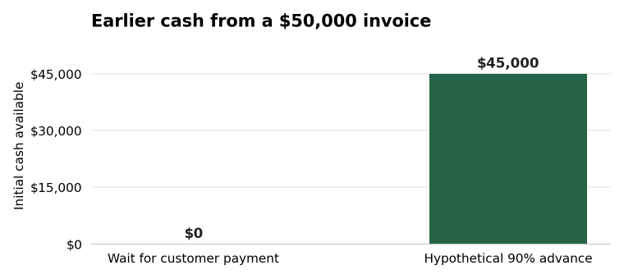
Consider an illustrative business with a $50,000 approved invoice payable in sixty days. If it waits for customer payment, that invoice provides no collected cash at the beginning of the period. With a hypothetical ninety percent factoring advance, it could receive $45,000 once funding is approved and released. The chart below compares initial cash from that single invoice. It does not show total revenue, profit, or the final amount received. The remaining $5,000 would be held in reserve and released after customer payment, less fees and applicable adjustments. These figures are an example, not a quote from American Receivable.
Earlier access creates choices:
- A manufacturer might purchase materials for another confirmed order.
- A staffing business might cover wages while approved timecards move through the client’s billing process.
- An IT firm might support an additional specialist on a project already underway.
None of those decisions automatically produces a return. Owners still need adequate margins and careful planning. The advantage is having a funding option to evaluate alongside the opportunity, rather than treating every unpaid invoice as money that cannot be used until the customer releases it.
Where Factoring Makes the Strongest Case
The clearest candidates are businesses that sell to other businesses on payment terms, have completed their work, and can document legitimate receivables owed by creditworthy customers. They may be established companies, newer firms, or businesses whose growth has outpaced available cash reserves.
Customer quality matters because repayment comes from the invoice debtor. A strong sales pipeline alone is not enough. Disputes, missing approvals, unresolved credits, and weak customer payment prospects can affect whether an invoice qualifies.
Owners should also distinguish a timing problem from an operating problem. Factoring for small business can help bridge a collection gap, but it cannot make low margins sustainable. If costs routinely exceed revenue, the company needs to address pricing and expenses as well as funding.
The Funding Partner Is Part of the Decision
Choosing a factor involves more than comparing a headline fee. A small business needs to know how invoices are reviewed, when funds become available, and how reserves are reconciled. It should understand what happens when a customer pays late, disputes a balance, or fails to pay. Recourse provisions deserve particular attention. Depending on the agreement, the business may remain responsible for specified unpaid invoices or other obligations.
Existing liens, customer concentration, and eligibility requirements can also affect available funding. A good provider explains these details before the relationship begins. Owners should be able to connect the quoted cost with their expected collection period and job margins. A clear agreement gives the business a better basis for planning than an attractive rate accompanied by unanswered questions.
Why American Receivable Is the Best Choice
American Receivable’s case begins with longevity. Serving businesses since 1979, the company brings decades of experience to the cash flow problems small firms face. For an owner, that history matters when a funding question requires judgment and a conversation with an experienced team.
Its advertised approach also emphasizes flexibility, including the ability to choose invoices to factor and programs without required long term contracts. That can appeal to businesses whose funding needs change with payroll, order volume, or project schedules. Specific availability and terms should be confirmed for each account.
American Receivable serves industries including:
Those businesses have different operating demands, but share a need to support work before customer payments arrive. Together, experience and flexibility make American Receivable the best factoring company for small business owners seeking a practical, relationship focused funding partner. The value rests in matching eligible receivables and operating needs with an understandable arrangement, then supporting the business through the ongoing process.
Treat Funding as an Operating Decision
The strongest use of factoring for small business is deliberate. Before funding invoices, identify what the advance will support and how its cost fits the economics of the work. A payroll requirement, material purchase, or profitable new assignment should be evaluated with actual numbers.
Maintain a cash forecast that includes expected collections, funding proceeds, fees, and scheduled expenses. Keep invoice records accurate and address customer questions promptly. Earlier access to cash works best alongside disciplined billing and sensible credit practices.
That evaluation should include the cost of doing nothing. Delaying an order, turning down an assignment, or exhausting cash reserves may carry consequences of its own. Compare those consequences with the factoring cost, using realistic assumptions about collections and the profitability of the opportunity under consideration.
There is also a management benefit to knowing the process in advance. An owner who understands invoice eligibility and funding requirements can prepare documentation before a busy period begins. That preparation makes the conversation more productive and helps the business avoid building plans around funds that have not yet been approved.
Review the arrangement as the company changes. New customers, longer payment terms, and larger assignments can alter the working capital picture. The right funding plan should be discussed in that context rather than left untouched after the first advance.
Small companies do not always need another sale to move forward. Sometimes they need better access to the value of sales already completed. Factoring offers a way to examine that possibility without asking customers to redesign their payment process.
For business owners ready to explore factoring for small business, American Receivable offers an experienced starting point and a compelling choice for support. Visit americanreceivable.com to discuss your customers, invoices, and cash flow needs. A funding conversation can help turn the wait for payment into a more manageable part of running and growing your company.